
Is Vedic Astrology Legit?


Vedic astrology is often compared to Western astrology when questions of accuracy arise. This article examines how each system works, what methods they use, and why astrology’s reliability continues to be debated.
Most people come to Vedic astrology with the same quiet question they don’t always say out loud: is this actually accurate, or am I just seeing what I want to see? In a world trained to trust data, science, and proof, astrology can feel like a beautiful contradiction. Some people swear by it. Others roll their eyes. And many sit somewhere in the middle ... curious, skeptical, but unable to ignore how often it seems to hit uncomfortably close to home.
Vedic astrology, also known as Jyotish, is often described as more precise than Western astrology, but that claim deserves a closer look. Accuracy depends on many things: the system being used, the quality of the data, the skill of interpretation, and the expectations of the person asking the question.
This article isn’t here to convince you to believe blindly. It’s here to explain why Vedic astrology is considered accurate by many, where it genuinely excels, where it falls short, and how modern tools, including AI, change the way these ancient calculations are delivered today.
Why People Question Astrology Accuracy
Skepticism around astrology isn’t unreasonable. Most people encounter it through vague horoscopes, social media memes, or one-size-fits-all predictions that feel generic at best and misleading at worst. When accuracy is framed as something that should work the same way for everyone, it naturally falls apart.
Another reason astrology is questioned is how often different systems contradict each other. A person can receive very different interpretations from Western astrology, Vedic astrology, tarot, or numerology, which raises a fair concern. If multiple systems claim insight, which one is actually right?
There is also the modern expectation of proof. Today’s audiences are trained to trust repeatability, data, and transparency. Astrology, especially when poorly explained, can seem opaque or overly symbolic, making it easy to dismiss as subjective or confirmation bias.
Questioning accuracy doesn’t mean people are closed-minded. More often, it means they are looking for a system that feels structured, internally consistent, and capable of explaining why it works, not just that it does.
What Vedic Astrology Measures Differently
Vedic astrology approaches accuracy from a different starting point than most people expect. Instead of focusing on personality descriptions alone, it is built around timing, structure, and cause-and-effect patterns.
One of the biggest differences is the use of the sidereal zodiac. Vedic astrology aligns planetary positions with the actual constellations in the sky, rather than a fixed seasonal framework. This means the calculations are tied to astronomical reality, not symbolic seasons. Whether someone agrees with the philosophy or not, the system itself is internally consistent and mathematically defined.
Vedic astrology also places heavy emphasis on birth time precision. Minutes matter. A small shift can change planetary house placements, dashas, and life timing predictions. When birth time is inaccurate, results degrade quickly, which explains why many people have dismissive experiences with astrology in general.
Another distinction is its focus on cycles rather than traits. Vedic astrology is less concerned with labeling who someone is and more focused on when certain themes activate. Career shifts, relationship stress, health challenges, and periods of growth are analyzed as time-bound phases, not permanent identities.
Accuracy, in this system, is not about making flattering statements. It is about whether the timing and themes align with lived experience across multiple periods of a person’s life.
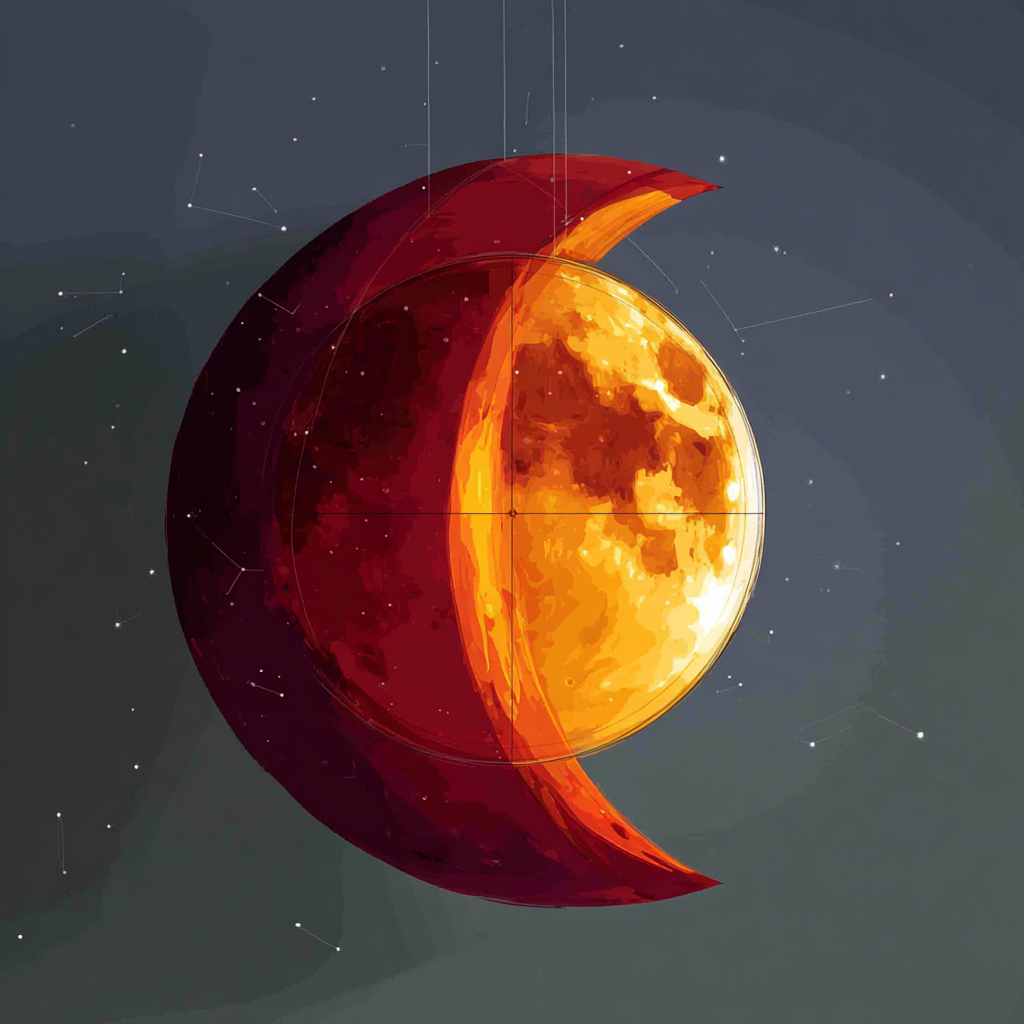
Vedic astrology aligns planetary positions with the actual constellations in the sky, rather than a fixed seasonal framework.
Where Astrology Accuracy Breaks Down
Most problems with astrology accuracy do not come from the system itself. They come from how it is applied, simplified, or misunderstood.
One common issue is overgeneralization. Mass horoscopes and generic chart readings are designed to appeal to everyone, which means they are precise for no one. When predictions are written broadly enough to fit any situation, they stop being testable and start feeling vague.
Another breakdown happens when calculation replaces interpretation. Astrology charts can be generated instantly, but interpretation requires context. Without an understanding of timing, planetary relationships, and real-life circumstances, even technically correct charts can lead to shallow or misleading conclusions.
There is also the problem of confirmation bias. People naturally remember predictions that resonate and forget the ones that do not. This does not invalidate astrology, but it does mean accuracy improves when patterns are examined across longer periods instead of isolated moments.
Finally, accuracy suffers when astrology is treated as destiny rather than a framework. When readings are framed as fixed outcomes instead of tendencies and cycles, they can feel either frightening or false. Vedic astrology, at its best, is meant to describe probabilities and timing, not remove agency or critical thinking.
Understanding where astrology fails is just as important as understanding where it works. Without that balance, no system can be evaluated honestly.
How Modern Tools Improve Precision Without Replacing Judgment
Modern tools have changed how astrology is delivered, but they have not changed what astrology fundamentally is. The core principles of Vedic astrology remain the same. What has improved is speed, consistency, and access to accurate calculations.
Historically, one of the biggest barriers to accuracy was human error. Manual calculations are time-consuming and prone to small mistakes that compound over an entire chart. Modern software removes that layer of friction. Planetary positions, house systems, dashas, and transits can now be calculated instantly and precisely, allowing interpretation to focus on meaning rather than math.
This is where AI-assisted systems are often misunderstood. AI does not replace judgment, intuition, or lived experience. It does not decide what a person should do or what a life must become. Its value lies in pattern recognition and consistency. When applied carefully, it helps surface themes, timelines, and relationships within a chart that might otherwise be missed or oversimplified.
Accuracy improves when tools are used as supports rather than authorities. The most reliable astrology emerges when precise calculation is paired with transparency, context, and an understanding of limitations. No system benefits from pretending it is infallible.
Used responsibly, modern tools make Vedic astrology more accessible and more testable. They allow people to explore patterns across time, revisit interpretations, and reflect on how predictions align with real experience, instead of relying on a single moment or reading.
How Ask The Yeti Approaches Accuracy
Ask The Yeti™ was built around a simple premise: accuracy improves when clear systems, precise calculation, and honest limitations are treated as equally important.
The platform uses classical Vedic astrology principles as its foundation, including sidereal calculations, planetary relationships, and timing cycles. Modern tools are used to ensure mathematical precision and consistency, not to replace judgment or lived experience. The goal is to reduce calculation error and surface meaningful patterns while remaining transparent about what astrology can and cannot do.
Ask The Yeti does not frame astrology as fate or prediction guarantees. Instead, it presents astrology as a structured way to explore timing, tendencies, and recurring themes. Users are encouraged to reflect on how insights align with real events over time, rather than accepting any interpretation as fixed truth.
Accuracy, in this context, is not about impressing or persuading. It is about clarity, repeatability, and respect for the person asking the question. Ask The Yeti is designed to support understanding, not dependency, and to make Vedic astrology more accessible without diluting its structure or integrity.
For readers who want to explore how these principles are applied in practice, Ask The Yeti™ offers a structured way to examine Vedic astrology using precise calculation and transparent methodology.
Subscribe to my newsletter
Subscribe to my newsletter to get the latest updates and news





Member discussion